The Appearance of the “Last Responsible Moment”

October 9, 2011
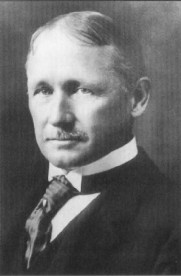
Frederick W. Taylor

Frederick W. Taylor

Returning to the idea of “buttoned up.” Because of a series of seeming unrelated coincidences, I’ve become interested in the idea of the “Last Responsible Moment” (“LRM”), a decision-making process that is sure to not feel “buttoned up.”

I happened to see Karl Scotland retreating a tweet by Alistair Cockburn that Alistair had blogged about LRM and then, coincidentally, at least according to site stats, I had just noticed a series of searches on “Model T Ford” have brought people to my own blog. They were probably looking just looking for photos of the car more than to think about – and question – Frederic Taylor’s School of Scientific Management (a methodology that was Fountainhead of the Waterfall process).

Read the rest of this entry »

#agileday2011 Reflections on Job Candidates and Dr. Linda Rising

September 29, 2011

I was revising a job description as I need more Project Managers at my company.  I stopped for a second on what seems like a standard, throw-away phrase in these sorts of things:

…attention to detail, a collaborative spirit, and a readiness to learn…

What do these really mean?  If you are looking to hire someone, how do they really exhibit these qualities?

Read the rest of this entry »

#agileday2011 Andrew Kazarinoff on Agile Metrics: beyond the burndown

September 27, 2011

As usual, these are my raw notes

Paper to read: Jeff Sutherland and Scott Downey “Scrum metrics for Hyper-Productive Teams” July 2010

Qualytic Consulting is Andrew’s company; works as a coach

Metrics and anti-patterns:
– Root causes
– Coaching goals
– Behavior change

Anti-patterns > root causes > coaching
Visibility. Inspection. Adaptation.

Talked about an example of being with a group that had all stakeholders present.

Looking at turndown charts. When there are exceptions – what does it say?

To improve estimates, make sure whole team is part of estimating process.

“Found Work” affects estimation accuracy.

Commitment ratio – affects road map reliability and pace. Teams become over-cautious. Reminds me of when Jeff Patton did the ball exercise. Our teams were hyper-cautious.

Also, important that the work is done-done. Not “done.” Technical debt is a nasty creditor. Causes a clean-up Sprint.

Make sure stories are closed in sprint.

Effort focus:
– team at beginning estimates capacity
– can live with this providing does not change
– team members not continuously pulled off for problem fixes

Minimize context switching, enable capacity commitments to be met, make capacity commitments realistic.

What does management relate to? Does not relate to burn-down charts.

They relate to how much usable work have we done? Completed usable features or running tested features.

#agileday2011 just do what works / @agile umpire

September 27, 2011

Quick notes on talk by George McMonigle and Matthew Groner which I enjoyed. Ironically had *just* said with Anupam Kundu Of Thoughtworks about how at times presenters have gotten too far from the actual work. These guys were talking, no blemishes hidden, about what had worked for em, what they could do berthed.

Had a great slide:

In order to….
We used to…
But now we…

For example:
In order to measure performance we used to focus on burndowns but now we focus on story points.

Agile effectiveness over orthodoxy.